


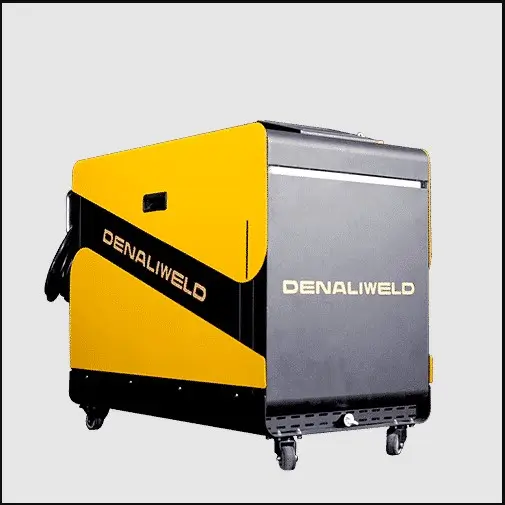
In the fast-paced world of modern construction, precision and efficiency are everything. Traditional welding methods often struggle to keep up with the demands of innovative designs and tight project timelines. That’s where industrial laser welders step in, revolutionizing how structures are built and reshaping the industry.
You’ll discover how these cutting-edge machines deliver unmatched accuracy, reduce material waste, and speed up construction processes. Whether creating seamless joints or handling complex geometries, laser welding sets new standards for durability and design flexibility. Dive in to see how this technology is transforming the future of building construction.
Overview Of Industrial Laser Welders
An industrial laser welder represents a significant development in construction technology. These machines use concentrated laser beams to join materials with remarkable accuracy. Unlike traditional welding techniques, laser welding uses high-energy light waves, requiring less heat to produce precise, clean joints.
Industrial laser welding typically relies on two technologies—fiber lasers, best for metals like steel and aluminum, and CO₂ lasers, which excel with non-metal materials such as ceramics—and both deliver the speed, precision, and minimal heat-affected zones that improve tasks from sealing structural components to fabricating intricate architectural details, achieving weld rates of up to 20 m per minute while cutting distortion, energy use, and material waste;. However, upfront costs are high, but lower operating and maintenance expenses quickly offset the investment, making these systems cost-effective over time.
Comparing functionality and production capabilities helps clarify their benefits.
| Attribute | Fiber Laser Welders | CO2 Laser Welders |
|---|---|---|
| Material Compatibility | Metals (steel, aluminum) | Non-metals (ceramics, plastics) |
| Energy Efficiency | High | Moderate |
| Speed | Up to 20 meters per minute | Slower than fiber lasers |
| Maintenance | Lower | Higher due to optical mechanics |
Industrial laser welders reshape construction approaches, reshuffling speed, quality, and resource allocation priorities.
Key Features Of Industrial Laser Welders
Industrial laser welders incorporate advanced technology to deliver significant improvements in building construction. Below are some defining characteristics that set them apart.
Precision And Accuracy
Concentrated laser beams can join materials with minimal deviation, often achieving tolerances within 0.05 mm. This level of exactness proves invaluable for structural components requiring tight specifications, such as steel beams or prefabricated connectors. Complex architectural designs also benefit by accommodating intricate detailing without compromising quality.
For instance, welding aluminum panels for high-rise facades or custom steel trusses becomes more reliable when the margin for error is drastically reduced. Precise heat control prevents warping, maintaining consistent outcomes across various metals.
High-Speed Efficiency
Laser welders execute tasks faster compared to traditional methods. Fiber lasers reach welding speeds of up to 20 meters per minute. Accelerating these processes helps cut project timelines, especially in large-scale constructions like warehouses or residential towers.
Material adaptability further increases speed. Switching between thin metal sheets, such as stainless steel roofing, and thicker materials, like structural plate steel, occurs seamlessly. Quick adjustments reduce downtime, contributing to enhanced productivity.
Enhanced Durability And Strength
Laser welding forms stronger bonds due to deeper penetration and consistent energy distribution. These welds better resist stresses from weight, temperature shifts, and environmental exposures than manually applied ones.
Superior bonding properties benefit applications requiring longevity, such as bridges or load-bearing columns. Strong connections reduce the likelihood of crack propagation or joint failure over time, improving overall structural integrity.
Applications In Modern Building Construction
Industrial laser welders contribute significantly to diverse construction processes. Their precision and efficiency support intricate designs and robust structures.
Structural Component Fabrication
Laser welders play a critical role in manufacturing load-bearing parts. Tight tolerances, often within 0.05 mm, result in precise joints for beams, columns, and trusses. These connections improve strength and structural alignment. For example, fiber lasers effectively join high-strength steel and aluminum components used in skyscraper frameworks.
Such precision reduces the likelihood of misalignment during assembly. Pre-fabricated parts welded with lasers achieve compatibility for projects requiring modular construction techniques, resulting in fewer on-site modifications. Faster production of these components also cuts overall project duration while maintaining quality.
Facade And Exterior Building Design
Laser welding supports modern facade engineering by enabling seamless designs. Stainless steel and aluminum panels used in exterior cladding often require tight, durable welds to handle weather conditions. Denaliweld fiber laser welders create visually smooth finishes while preserving panel rigidity.
For complex geometric designs, laser systems simplify the joining of non-linear surfaces. Applications like curtain walls benefit from welders that accommodate unconventional dimensions and shapes. This capability ensures compatibility with experimental architectural layouts, elevating function and visual appeal.
Reinforcement And Repair Processes
In renovation or retrofitting, laser welders facilitate structural reinforcement. They efficiently bond new materials like carbon steel plates to existing frameworks without compromising original integrity. Welds created with controlled heat input prevent surrounding material distortion, an important factor in repairing load-bearing elements.
With lasers, repairing damaged or corroded parts in infrastructure, such as bridges or support columns, becomes more precise. Instead of replacing entire sections, critical areas can be reinforced, extending the service life of structures. The speed and accuracy of these welders reduce downtime during repair work, an essential factor in public infrastructure projects.
Advantages over Traditional Welding Methods
Adopting industrial laser welders for modern construction introduces distinct benefits compared to conventional welding. These advantages disrupt established processes, prioritizing efficiency and innovative material handling.
| Aspect | Key Benefit (one sentence) |
| Cost Efficiency | Laser welders offset their higher purchase price with high-speed welds, superior energy efficiency, and long-lasting components that cut labor, operating, and maintenance costs. |
| Reduced Material Waste | Their precise, low-distortion process achieves tight tolerances with minimal filler, rework, or scrap, maximizing material utilization and boosting profit margins. |
| Increased Safety Measures | Non-contact, automatable laser welding emits few sparks or fumes, keeps operators at a safe distance, and limits thermal hazards, creating a safer work environment. |
Conclusion
Industrial laser welders are redefining what’s possible in modern building construction. Their unmatched precision, speed, and versatility make them a game-changer for projects demanding durability and intricate designs. While the initial investment may seem steep, the long-term benefits in efficiency, quality, and cost savings far outweigh the challenges.
As construction demands evolve, embracing this advanced technology positions you to meet higher standards in performance and innovation. By staying ahead of the curve, you ensure your projects are competitive and built to last in an ever-changing industry landscape.