


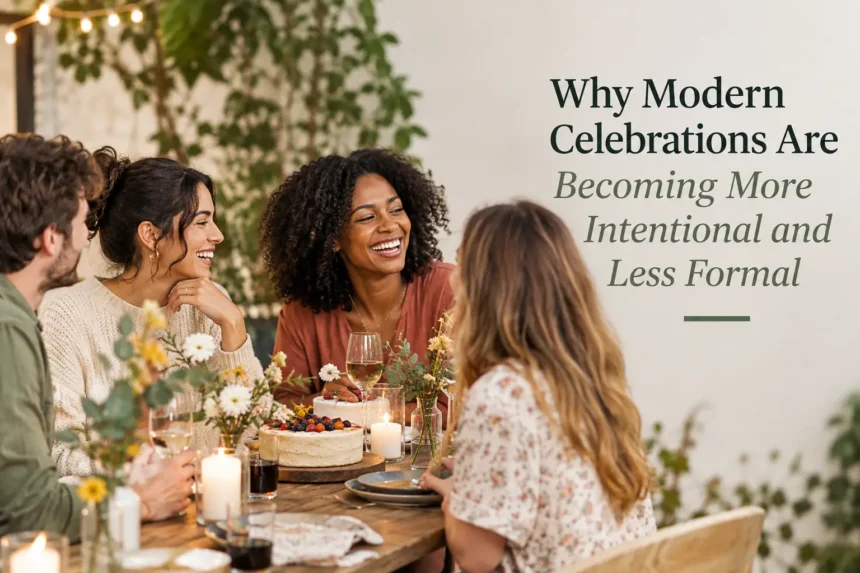
Formal celebrations once came with relatively predictable expectations. Weddings followed established timelines, showers used familiar formats, milestone birthdays tended to resemble one another, and hosts often relied on tradition to decide what an event should include. That is changing as people become more comfortable keeping the customs they value and discarding the ones that feel unnecessary. The result is not necessarily less effort, but a different kind of planning focused more on meaning, personality, and guest experience.
Keep the Traditions That Still Feel Fun
Not every traditional element needs to disappear simply because celebrations are becoming less formal. A send-off using sparklers for weddings at the end of the night can still feel fresh because it combines a recognizable wedding ritual with a highly participatory moment. Guests are not simply observing another formal tradition, instead they become part of it. The experience can fit both a black-tie reception and a casual outdoor wedding.
This is a useful way to evaluate other customs too. Instead of asking whether a tradition is old-fashioned, couples and families can ask whether it adds meaning or enjoyment. Cake cutting, speeches, first dances, guest books, and formal entrances can all remain if they feel personal. Tradition becomes a menu rather than a mandatory checklist.
New Milestones Are Creating New Traditions
People are also developing rituals around events that were once handled more quietly. Pregnancy announcements, adoption news, college commitments, promotions, home purchases, and other milestones increasingly become reasons to gather. Products such as a gender reveal fire extinguisher reflect the desire to turn an announcement into a shared experience. The tradition is relatively new, but the motivation behind it is familiar. Ultimately, people want to mark change together.
Some of these newer customs will fade, while others may remain for generations. That is how traditions have always developed. A practice feels modern until enough families repeat it that it begins to feel familiar. Today’s personalized celebration can become tomorrow’s inherited ritual.
Smaller Guest Lists Can Create Bigger Experiences
Many hosts are intentionally choosing smaller events rather than assuming every celebration should include everyone they know. A reduced guest list can free money and attention for better food, more comfortable settings, or experiences that would be difficult to provide for a large crowd. Smaller gatherings can also make conversations easier and reduce the sense that hosts need to perform for the room. Intimacy becomes part of the design.
This does not mean large celebrations are disappearing. Some milestones genuinely call for bringing a wide community together. The difference is that size is increasingly treated as a choice rather than a measure of importance. A twenty-person dinner can feel just as significant as a two-hundred-person reception if it reflects what the hosts actually want.
Unconventional Venues Are Changing the Mood
Hotels and banquet halls remain popular for good reasons, but celebrations now happen almost everywhere. Restaurants, backyards, vacation rentals, gardens, galleries, breweries, rooftops, farms, and community spaces allow hosts to choose environments that already have personality. When the setting contributes to the atmosphere, less decorative work may be necessary. The venue itself becomes part of the experience.
Unconventional locations can also create a more relaxed tone. Guests may move around differently in a garden than they would in a ballroom, while a restaurant naturally centers the event around a meal. The space influences behavior.
Food Is Becoming More Personal
Formal plated meals are no longer the automatic choice for important events. Families are serving favorite restaurant dishes, regional foods, brunch, food trucks, family recipes, grazing tables, barbecue, or interactive stations. These choices often tell guests something about the people hosting the event. Food becomes part of the story rather than simply a service that needs to be arranged.
A less formal meal can also improve interaction. Guests may move around, sample different foods, and talk with more people than they would during a long seated dinner. Of course, the serving style still needs to fit the crowd. Intentional does not mean ignoring practical needs such as seating, dietary restrictions, and accessibility.
Schedules Are Becoming Looser
Traditional event timelines can be helpful, but not every gathering needs to operate minute by minute. Modern hosts are often creating a few anchor moments and allowing more unstructured time between them. This can make celebrations feel less like programs and more like genuine gatherings. Guests have time to talk, eat, take photographs, and participate without constantly checking what happens next.
A loose schedule still needs enough structure to prevent confusion. People should know when food is served, when the main announcement occurs, and whether transportation depends on a particular departure time. The goal is not to remove organization. It is to hide the machinery well enough that guests can relax.